The current challenge in rail traffic management
The growth of rail traffic and the need to improve punctuality have raised the demands on control centres
5 reading time

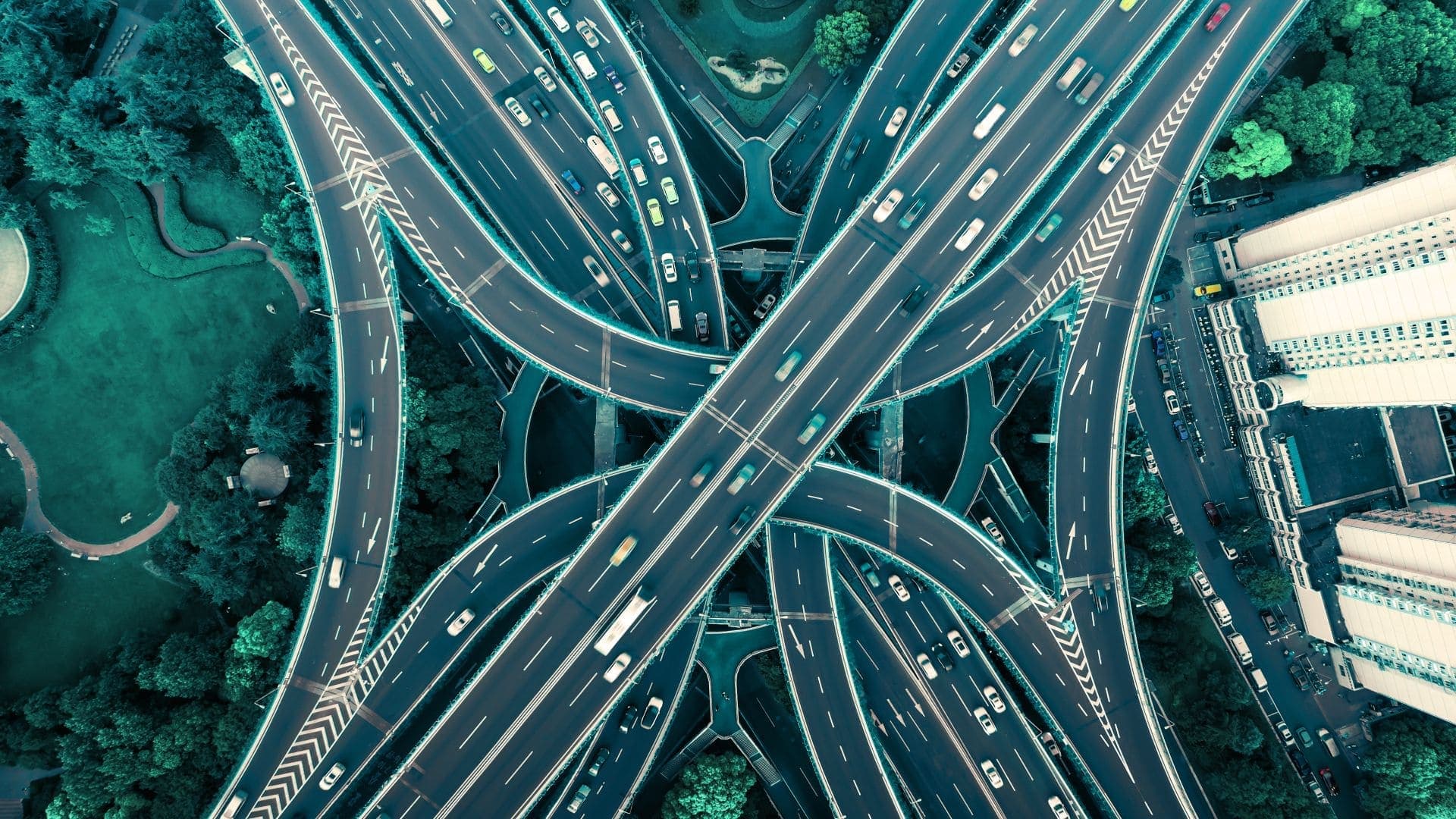
Rail traffic management has become an essential component to ensure safe, efficient mobility that can meet the new requirements of passenger and freight transport.
Unlike other modes of transport, rail depends on a linear infrastructure with limited capacity, where any incident can trigger a chain reaction.
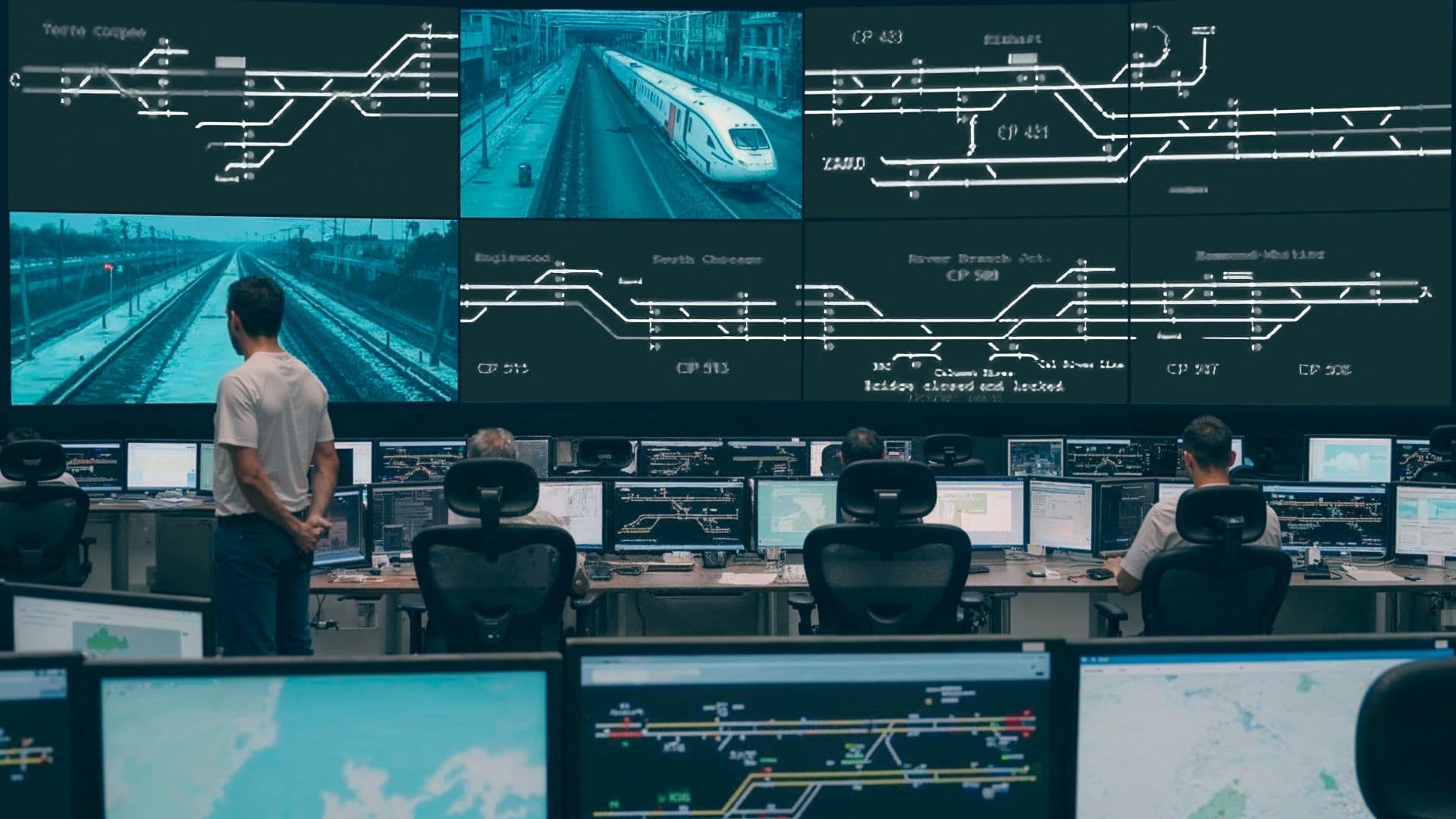
Managing a rail network therefore involves coordinating thousands of variables in real time—from track occupancy to train prioritisation and future impact on others—with a dual objective: safety and efficiency.
A complex problem with direct impact on mobility
The growth of rail traffic, the coexistence of high-speed, conventional, mixed, and freight lines, and the need to improve punctuality have raised the demands on control centres.
Added to these challenges is the pressure to optimise existing infrastructure by increasing frequencies, services, and competition among different rail operators—without raising operating or civil works costs—alongside the need to integrate new technologies and harmonise the European rail space.
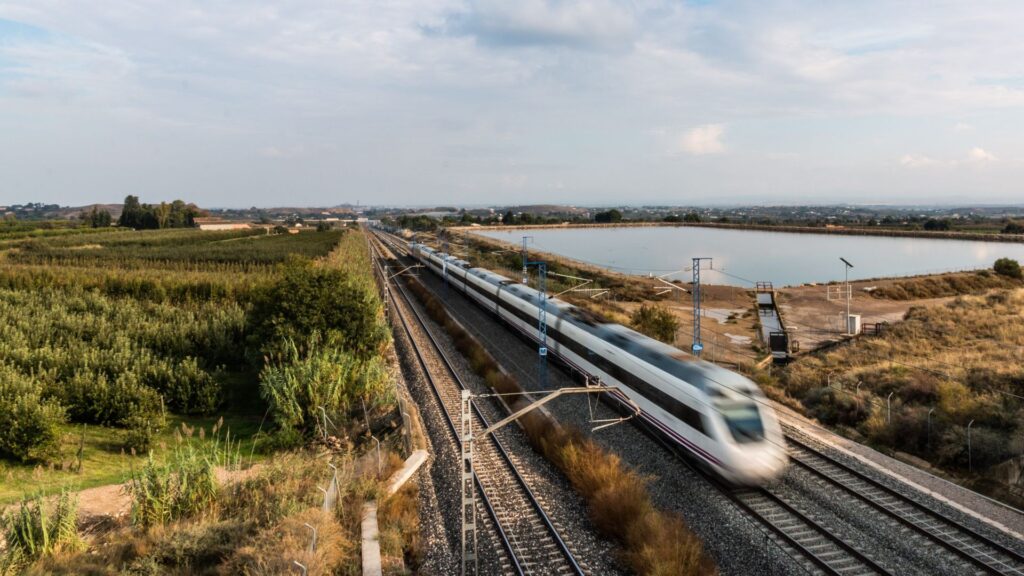
The impact of inefficient management is immediate: accumulated delays, reduced network capacity, increased energy consumption, difficulties in commercial operations, and a clearly affected passenger experience. For this reason, infrastructure managers are seeking advanced systems capable of anticipating conflicts, reducing manual tasks, and increasing service resilience.
Technology as the answer: digitalisation, automation, and intelligent data use
The digital transformation of rail has introduced key tools to improve operations. Today, rail traffic management relies on platforms capable of integrating signals, communications, energy systems, train information, IoT sensors in infrastructure, and predictive models based on big data.
Among the most relevant technologies are:
- Digital twins, enabling replication of real network behaviour to detect deficiencies and analyse capacity.
- Advanced simulation systems, anticipating conflicts between trains and facilitating planning.
- Automation of track and signalling elements, reducing response times to incidents and improving network capacity.
- Big Data and IoT, enabling intelligent exploitation of all available information, speeding up incident response, and improving maintenance strategies.
- System integration, promoting standardisation.
European innovation programmes such as Europe’s Rail have accelerated the arrival of standards, advanced tools, and interoperable technologies shaping the future of rail mobility.
A comprehensive vision: the evolution of railway management
The evolution of rail operation systems has been constant in recent decades, driven by the need to improve punctuality, increase capacity, and ensure safety. The growing use of digital tools, automation, and data-driven approaches enables responses to current challenges and anticipation of future ones. Thanks to these advances, rail networks can operate more flexibly, absorb incidents faster, and maximise every kilometre of infrastructure.
Indra’s TMS system is a prime example: after more than 25 years of technological evolution, it has become a leading solution managing over 30,000 kilometres of track worldwide, including more than 4,000 km of high-speed lines, facilitating the mobility of 730 million passengers annually.
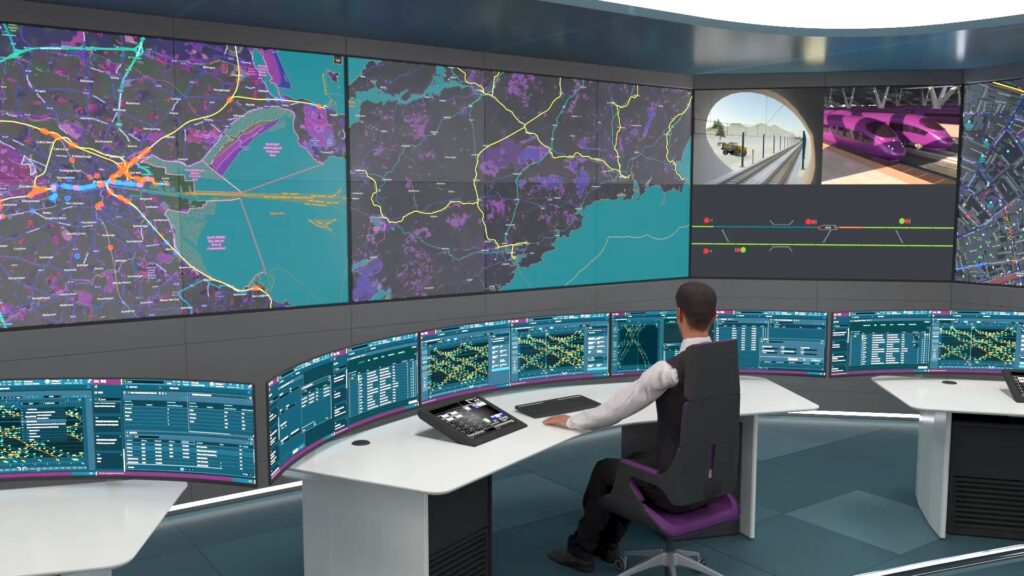
In-Mova Rail is the name of the new generation of our TMS—a comprehensive platform designed to manage and control all rail operations with a fully digital approach. Its purpose is clear: to offer a global view of the network and improve operations through automation, intelligent replanning, and technologies that increase capacity, safety, and reliability.
Open Digital Signalling
Indra’s TMS system integrates natively with our Open Digital Signalling technologies, incorporating open interfaces based on standard protocols from the design phase.
The system integrates naturally with ERTMS-based control systems and includes the capabilities needed to adapt to future systems such as Connected Driver Advisory System (C-DAS) or ATO, through the transmission of regulation instructions.
Its architecture allows easy integration of proprietary signalling protocols, creating an integrated environment for unified rail traffic management.
Military mobility and trans-European networks
Military mobility is a strategic element of European defence, posing new challenges for rail—challenges that directly impact traffic management systems.
Our systems incorporate cyber-resilience measures from the design stage. Likewise, the open technologies and architectures of our systems are ready to evolve towards federated traffic management systems, enabling cross-border interoperability and the achievement of a single European rail space.
Railway management ready for the future
The future of rail traffic will be defined by more interconnected networks, platforms capable of learning from system behaviour, and technologies enabling faster, more accurate decisions. The convergence of artificial intelligence, advanced communications, automation, and data analytics promises more sustainable, resilient, and passenger-focused operations.
Traffic management is no longer just about supervising trains: it is becoming a discipline that drives national competitiveness, supports the green transition, and paves the way for truly smart mobility. Moving in this direction requires combining experience, innovation, and a technological vision that anticipates challenges and transforms how we understand rail transport.
The journey is already underway, and rail continues to consolidate its position as one of the strongest pillars of future mobility.
The impact of inefficient management is immediate: accumulated delays, reduced network capacity, increased energy consumption, difficulties in commercial operations, and a clearly affected passenger experience. For this reason, infrastructure managers are seeking advanced systems capable of anticipating conflicts, reducing manual tasks, and increasing service resilience.
Recommended for you
Related Articles
Connected vehicle-based tolling: welcome to the future

Managed lanes: how dynamic pricing helps decongest motorways

Open Digital Signalling: breaking down barriers between European railway systems

Indra at Global Mobility Call 2026: Technology as a transformative force in Mobility